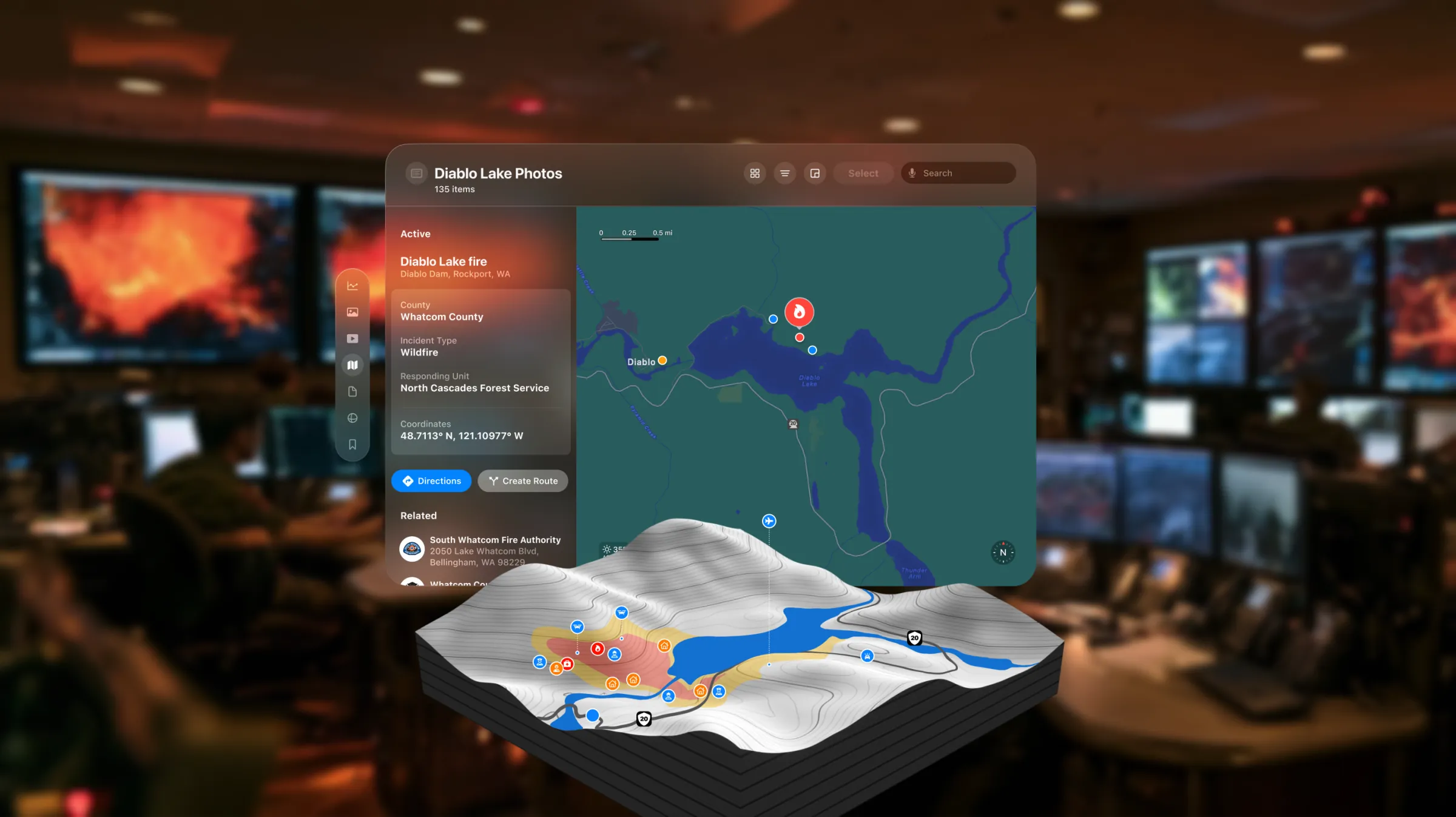
FireOps
Reimagining emergency response through an immersive Apple Vision Pro experience.
By Erik Loehfelm
Immersive + Digital, 5 min read
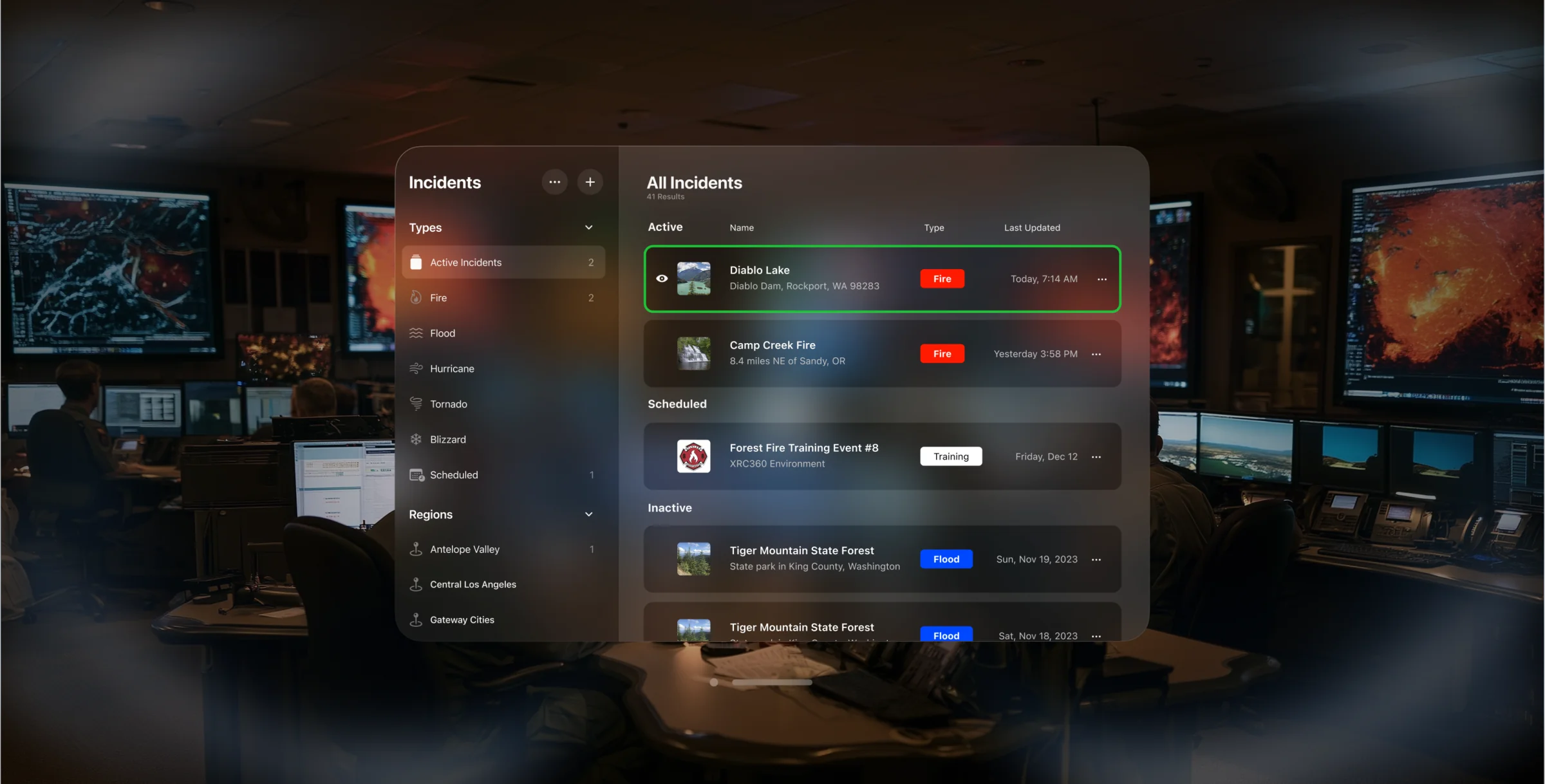
EKKO partnered with About Objects to concept and design FireOps, an emergency response experience built for Apple Vision Pro. Exploring the potential of spatial computing in high-stakes environments, the project reimagines how incident commanders access critical information, maintain situational awareness, and make decisions when every second matters.
The Challenge
Emergency response has a UX problem. The tools incident commanders rely on during active events, from radio interfaces and dispatch software to mapping systems, were designed for desks, not for people making critical decisions in the field.
Hired by About Objects to concept and design an Apple Vision Pro experience for FireOps, EKKO set out to explore how spatial computing could transform emergency operations. The vision was to put a complete operational picture directly into an incident commander's field of view, making critical information accessible without pulling their hands or attention away from the work.
But designing for Vision Pro introduced a fundamentally different challenge. This wasn't about designing for a screen; it was about designing for a person who was also navigating a complex, high-pressure environment. The interface couldn't compete for attention. It had to earn it.
Our Process
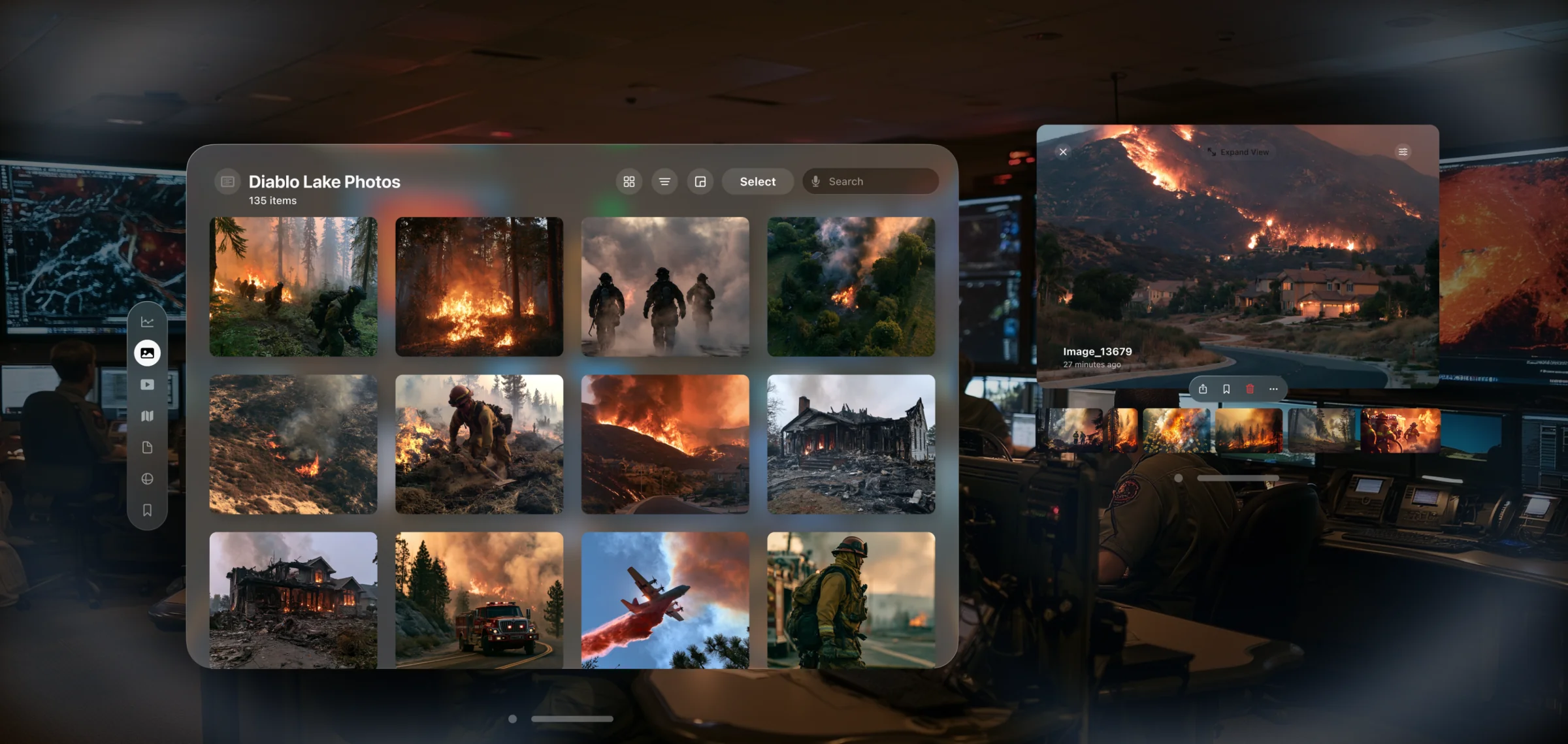
Working alongside About Objects, who brought deep Apple platform expertise, and DigitalCM, who led real-world integration with emergency dispatch systems, EKKO focused on the experience layer: how FireOps communicates under pressure, how users navigate information in the field, and what it takes to build trust in a high-stakes environment.
The most valuable design sessions happened outside the conference room. Through simulated scenarios and tabletop exercises with actual incident commanders, the team tested whether the experience could hold up against the realities of an active event. It didn't, at first. The first three iterations exposed critical gaps. Those failures became the foundation for a better experience.
Designing for spatial computing also demanded a different approach to iteration. Rather than relying solely on prototypes or specifications, EKKO established a set of core design principles to guide every decision:
- Readability at a distance: Critical information had to remain clear within the spatial environment.
- Minimal interaction: No action should require more than a single gesture.
- Information hierarchy: The most important data needed to sit above the user's natural gaze line.
- Attention by design: The interface had to communicate what mattered without demanding unnecessary focus.
Every iteration was measured against these principles and tested against the needs of the people who would depend on it.
Outcome
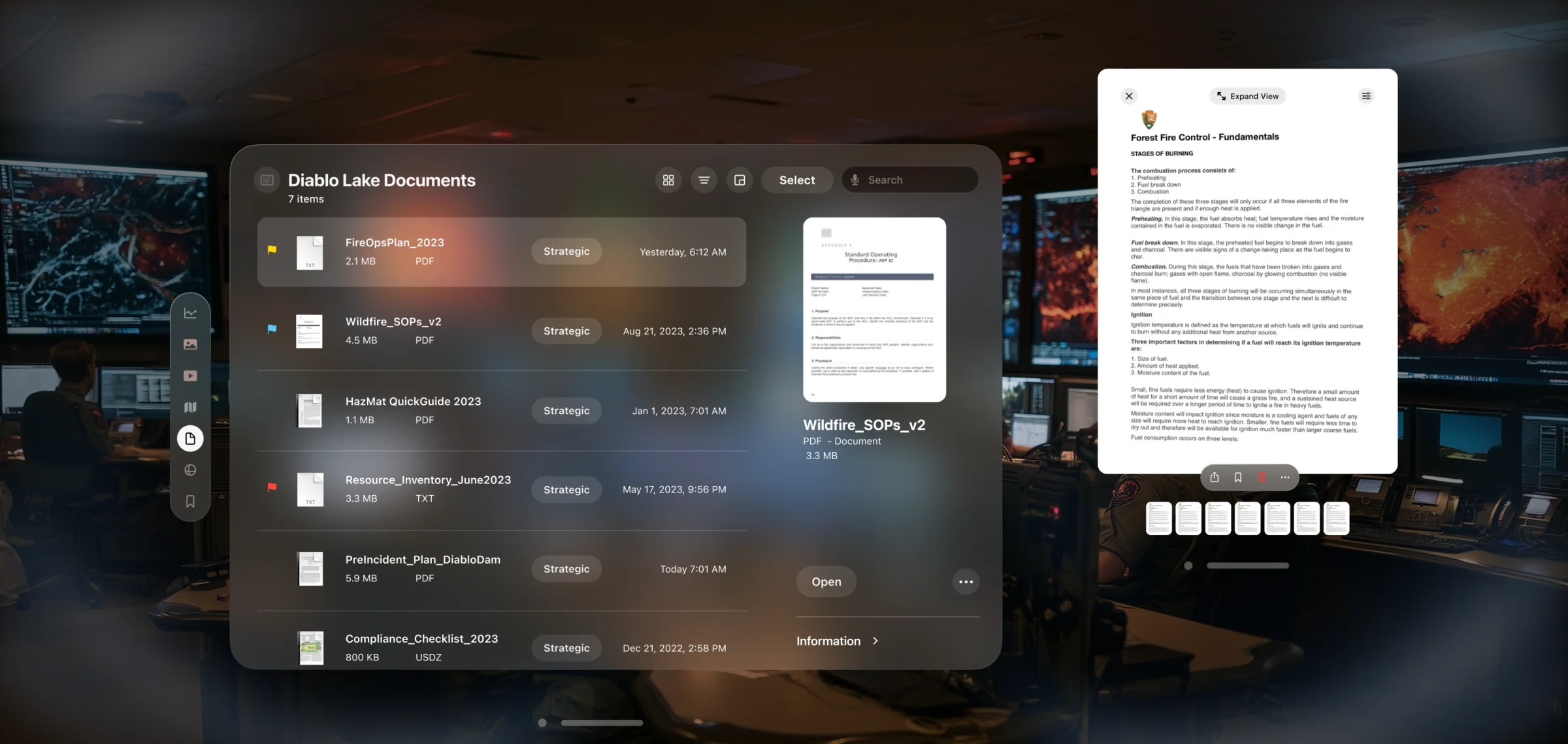
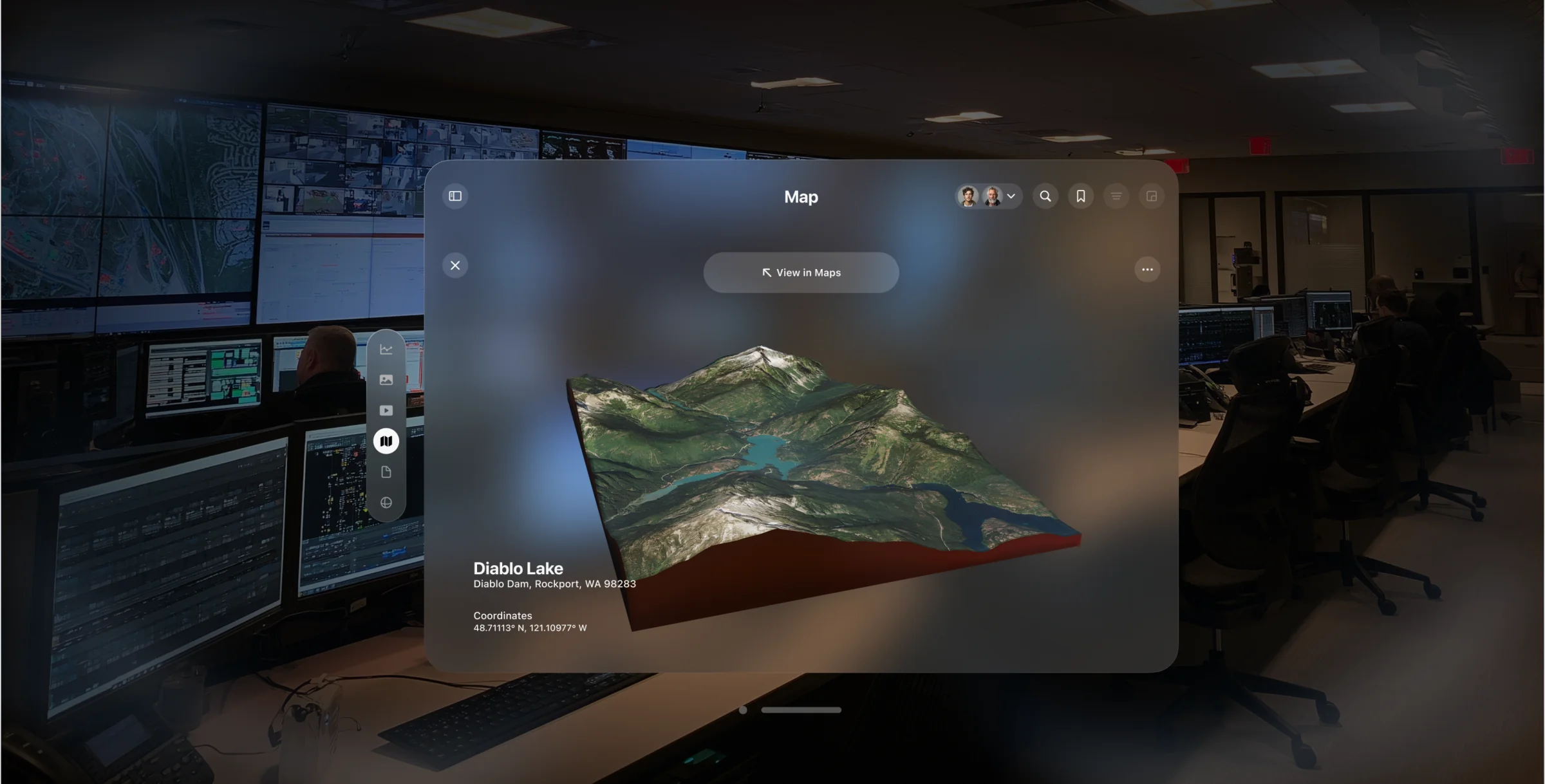
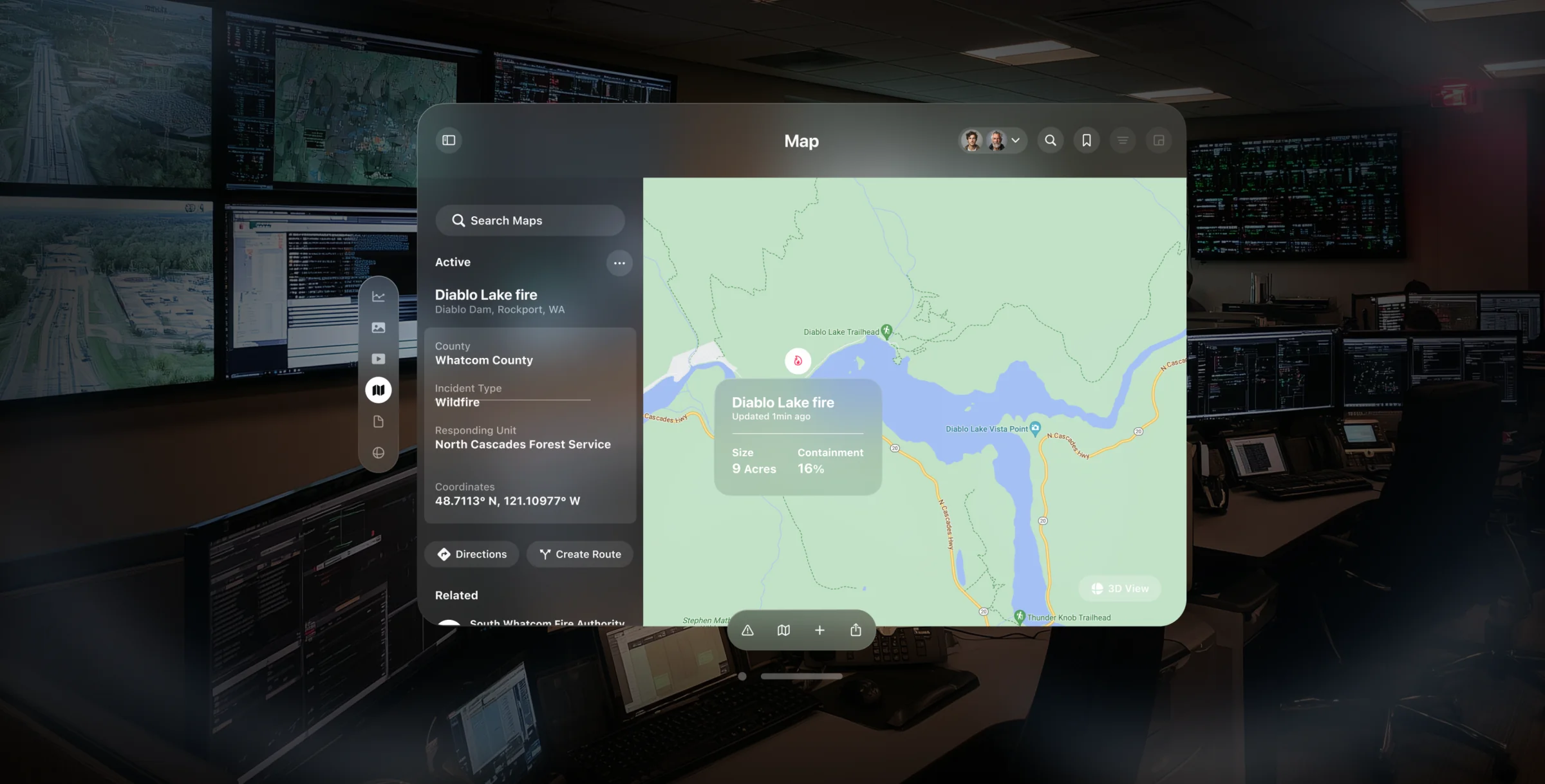
FireOps brought a new way of thinking about emergency operations to Apple Vision Pro. The result was a spatial interface designed to give incident commanders a clearer, more immediate view of unfolding events without taking them away from their surroundings.
EKKO translated complex operational information into an experience built around the realities of emergency response. The interface brought critical data into the user's field of view, prioritized information by urgency, and reduced the interaction required to access it.
The work established a foundation for spatial computing in high-stakes environments, demonstrating how thoughtful interface design can make emerging technology practical, purposeful, and easier to trust when it matters most.
Why It Matters
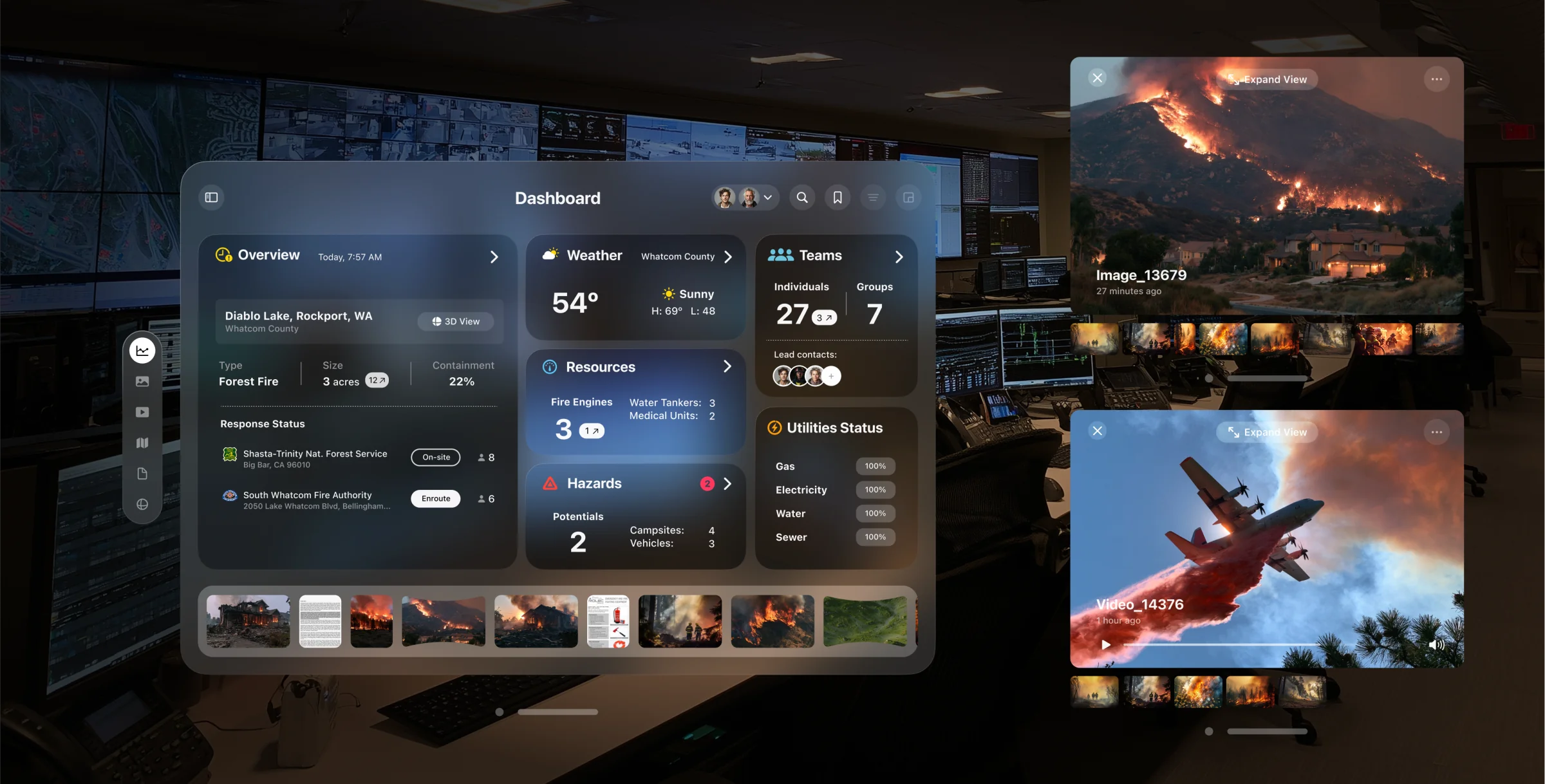
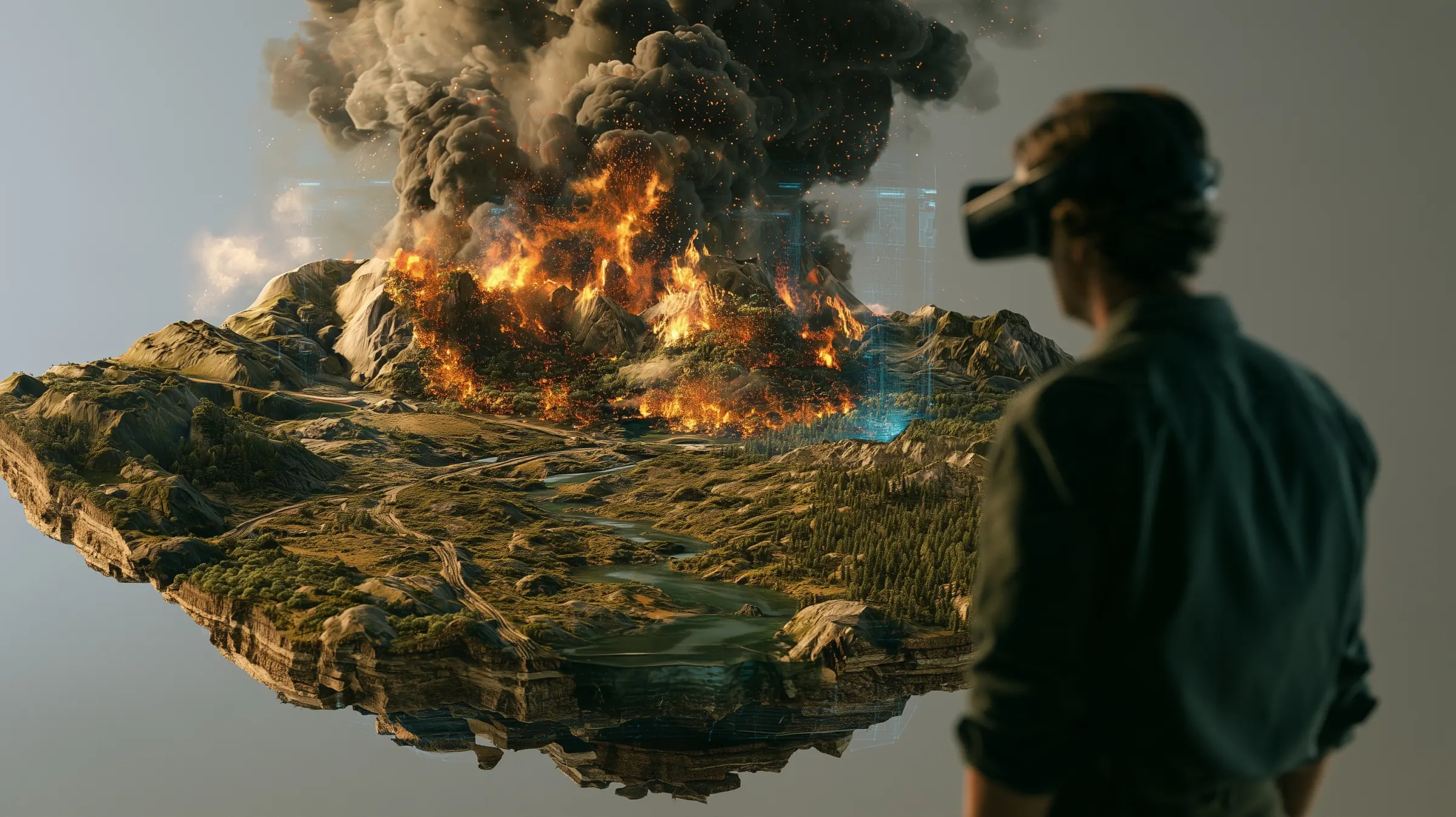
FireOps represents an early exploration of what's possible when spatial computing moves beyond consumer experiences and into high-stakes professional environments.
For incident commanders, having the right information at the right moment can make a meaningful difference. By bringing operational intelligence into the user's field of view, FireOps reimagines how people interact with complex systems when their attention is already stretched and the stakes are high.
But the significance extends beyond the product itself. The design patterns established here, from spatial information hierarchy to interaction under pressure, will help shape how future professional experiences are built, regardless of the hardware generation.
Spatial computing in emergency response is still early. That's precisely why getting the experience right matters.
EKKO is proud to have helped establish what that future can look like.
“The real challenge wasn't designing for Apple Vision Pro. It was designing for the person wearing it, and everything happening around them.”
—Erik Loehfelm
Questions worth asking
-
We looked beyond traditional emergency response methods to imagine new possibilities. By challenging conventional approaches, we explored how immersive technology could help responders better understand, prepare for, and navigate critical situations.
-
We partnered with About Objects and immersed ourselves in the emerging capabilities of Apple Vision Pro. Through hands-on experimentation and collaboration, we explored uncharted territory to bring an entirely new kind of emergency response experience to life.
-
We partnered with About Objects to embrace the evolving nature of spatial computing. By designing for adaptability, we created an experience that can grow alongside the technology and the future of emergency response.