Blue-Collar UX: What That Phrase Actually Means
The best UX work is about knowing what’s actually needed and getting to work. It’s that simple.
By Brad Ruiter
, 5 min read
We didn’t come up with the idea of “keeping things simple” in a strategy session. We got it from a contractor. The guy we’d trusted for years to work on our houses had a way of looking at a complicated problem, figuring out what actually needed to happen, and then saying, “Alright. Let’s get to work.” Somewhere along the way, we realized that was exactly how we wanted to approach UX.
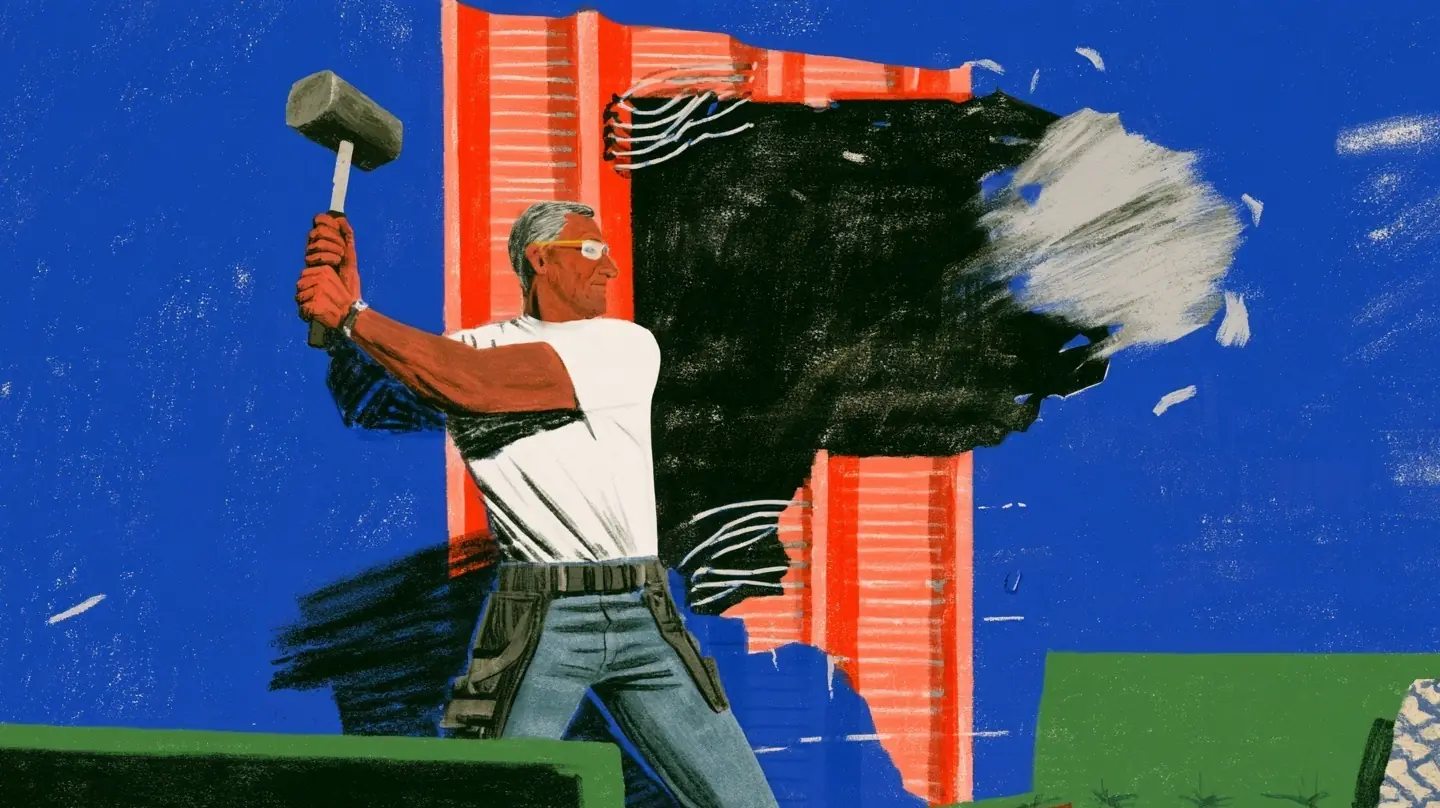
Both Matt, another Ekko partner, and I used the same guy for years on projects around our own homes. He’d show up in his pickup truck, gray-haired and clearly seasoned, climb out, and ask the same question every time: “So, what are we trying to get done today?”
I’d walk him through it. Point at a wall we wanted gone, hand him a couple of inspiration photos torn from wherever inspiration photos come from. He’d nod, pull a scrap of paper out of his pocket (never a clipboard, never an app, just whatever paper survived the wash that week), and start scratching down notes. He’d walk the room, look at the problem from a few different angles, go quiet for a second, and then say something like, “Well, I think we’re talking about five grand or so in materials, and I can get started this afternoon. I might have some questions along the way. Will you be around?”
That was it. That was the whole proposal. A guy who’d spent a lifetime in construction, who understood the job well enough that he didn’t need forty pages to prove it. The contract was a verbal “let’s do it,” and off he went.
No cover page for this estimate
Here’s what got us, every time: he wasn’t guessing. He wasn’t padding the number to protect himself, and he wasn’t lowballing it to win the job. He’d been inside enough walls and under enough floors to know, within an afternoon of looking, what a project actually required. That kind of confidence doesn’t come from a training seminar. It comes from doing the thing, wrong sometimes, right most of the time, for twenty or thirty years, until the pattern recognition just lives in your hands.
That’s the part of “blue-collar” that has nothing to do with what you wear to work and everything to do with how you think. You look at the problem directly. You say what you actually see. You don’t dress up uncertainty as strategy.
Workarounds instead of write-offs
The other thing about our contractor: he hated spending our money on something he didn’t have to. More than once, mid-project, he’d find a way around buying new materials entirely: a beam reinforced instead of replaced, a fixture pulled from his own garage that did the job just as well as the one in the catalog. He wasn’t trying to under-deliver. He was trying to solve the actual problem in front of him with what was actually available, instead of defaulting to the most expensive fix because it was easiest to sell.
That instinct is rarer than it should be, in construction and in our world. It is a lot easier to hand a client a proposal that says “rebuild everything” than to spend an extra hour figuring out what’s already working underneath the mess. But the second one is the job. The first one is just an invoice with extra steps.

What that means when the truck is a laptop
At EKKO, we don’t swing hammers. We run UX audits, we build software, we sit across the table from businesses trying to figure out what a redesign, a rebuild, or a new piece of technology is actually worth to them. Different tools, same posture. We show up, we ask what you’re trying to get done, and we tell you what it will take, in plain language, before we ask you to sign anything.
We’ve built EKKO around a bench of people who are genuinely sharp: strategists, designers, developers, the kind of talent that could easily dress up a simple answer in a lot of unnecessary complexity if that’s what got billed by the hour. We ask them not to. Years of experience should make a scope of work shorter, not longer. If a problem takes twelve slides to explain, that usually means nobody’s fully solved it yet.
And just like our contractor walking the room before he ever picked up a tool, we go looking for what a business already has running underneath the mess before we recommend tearing anything out. Sometimes the fix is a redesigned checkout flow. Sometimes it’s just fixing the three things quietly breaking trust with your customers, and leaving the rest alone. Blue-collar UX means we’d rather be right about what you need than impressive about what we could sell you.
Blue-collar doesn’t mean basic
None of this is an argument for simple work. Some of the most technically demanding builds we’ve done, the kind involving real engineering, real architecture, real complexity under the hood, came wrapped in the plainest possible explanation to the client. That’s the whole trick. The complexity lives in the craft, not in the conversation. A good electrician doesn’t make you understand amperage to trust the panel is wired correctly. A good UX partner shouldn’t make you learn a new vocabulary to understand why your checkout page is losing customers.
Grit gets the work done. Precision is what makes the work actually good. We’ve never seen those two things as being in conflict, and we’ve built our whole methodology on the bet that they aren’t.

Why it matters
If you’re a business owner sitting across the table from a design or consulting firm right now, you already know the difference between a proposal built to sound impressive and one built to be true. You’ve felt it: the vendor who needs three meetings just to define the problem, versus the one who looks at it for twenty minutes and tells you straight what it’ll take and what it won’t. He never once tried to make a simple fix sound complicated to justify his price. That’s what actual expertise looks like when it doesn’t need to perform for anybody.
The businesses that get the most out of a partnership like ours aren’t the ones chasing the fanciest deck. They’re the ones who just want somebody to walk the room, tell them what they’re actually looking at, and get to work that afternoon.
By Brad Ruiter, UX/CX Strategist and founding partner at EKKO Studio